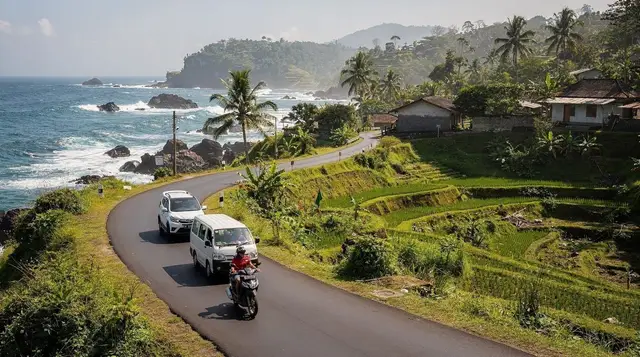
Uluwatu is a limestone cliff first and a temple second, in terms of what actually draws most visitors. Pura Luhur Uluwatu itself is a modest structure by Balinese temple standards, but its position — perched on the edge of a sheer drop with the ocean directly below — is the reason it has become one of the most photographed spots on the island. The temple complex is also the venue for one of Bali’s best-known cultural performances, the Kecak fire dance, staged most evenings as the sun goes down behind the cliff.
Below that same stretch of coastline, an entirely different Uluwatu exists for a different crowd: a run of world-class surf breaks that put the area on the international surfing map long before it became a general tourist stop. The two versions of Uluwatu — clifftop temple and dance in the late afternoon, surf and beach clubs during the day — barely overlap in practice, and most visitors experience only one or the other unless they deliberately plan for both.
None of this is exactly undiscovered. Uluwatu draws a heavy crowd for the sunset performance specifically, and the approach road and car park reflect that. Knowing what to expect in terms of timing and crowding changes the visit from frustrating to genuinely worthwhile, which is really the whole point of this guide. Treat this as a briefing rather than a warning: nothing here should put you off the visit, but a little preparation changes which version of Uluwatu you actually get.
Uluwatu at a glance
| Where | Southwestern tip of the Bukit Peninsula, south Bali |
| Cost | Temple entrance plus sarong rental; the Kecak dance performance is a separate ticket |
| Time needed | A couple of hours for temple and dance; a full day if you’re adding surf or beach clubs |
| Access | Private driver, Grab/Gojek, or organised tour from anywhere in south Bali |
| Best time | Late afternoon into sunset for the temple and dance; dry season for the best surf swell |
The temple and the cliff
Pura Luhur Uluwatu is one of Bali’s six key directional temples, historically positioned to guard the island from evil spirits arriving off the sea. Walking the temple grounds today means following a clifftop path with the ocean directly below on one side, with the temple’s black coral-stone gates and the sea as the real visual pairing rather than the architecture alone. It’s a striking setting even without the dance performance layered on top, and worth timing for good light rather than treating purely as a box to tick before the evening show.
Long-tailed macaques live along the clifftop path in genuine numbers, and they are opportunistic rather than shy — sunglasses, loose jewellery, and food left visible are all fair game. This is worth taking seriously rather than as a minor aside; monkey encounters here are frequent enough that most guides mention it before you’ve even reached the entrance.
The Kecak fire dance, and what to expect
The Kecak performance staged at Uluwatu’s amphitheatre is one of Bali’s most recognisable cultural exports: a circle of bare-chested male performers providing the entire soundtrack through rhythmic chanting, no instruments involved, while the Ramayana story plays out at the centre with a fire sequence toward the end. It’s staged with the sunset and the ocean as a backdrop, which is a large part of why it draws the crowd it does.
Because the amphitheatre seating is limited and the sunset timing is fixed, arriving early matters more here than at almost any other performance venue on the island. A package like the Kecak fire dance entry ticket and Uluwatu temple visit bundles the temple grounds and the performance into one ticket, which simplifies the logistics of the whole afternoon. For a version with less queuing and a more curated pace, the Kecak fire dance ticket at Uluwatu’s Karang Boma cliff viewpoint uses a slightly different vantage point along the same clifftop.
If you’d rather have the whole late afternoon handled, including dinner afterwards, the Uluwatu tour combining watersports with the Kecak dance stacks an active afternoon with the evening performance for a fuller day, while the Uluwatu Kecak and fire dance show entry ticket is the simpler standalone option if you just want the performance itself sorted.
Surfing below the cliffs
Uluwatu’s surf breaks are the reason the area had an international reputation years before the clifftop temple photos became an Instagram staple. The breaks here are well suited to intermediate and advanced surfers rather than complete beginners, with reef bottoms and a swell that rewards experience. Access to several of the breaks is via steep stairs and cave-like passages cut into the cliff face down to the water, which is its own small adventure before you’ve even paddled out.
Several of the breaks along this stretch — including Racetrack, Temples, and Impossibles — have their own individual character and are known by name among surfers well beyond Bali, each requiring a slightly different approach to the reef and the paddle-out. The wider Bukit Peninsula, of which Uluwatu is the southwestern point, holds this whole run of named breaks along the coast. If surfing is the main reason for your visit rather than a side activity, it’s worth reading a dedicated breakdown of the breaks rather than picking one at random based on proximity to the temple.
Uluwatu versus other south Bali beach areas
| Uluwatu | Canggu | |
|---|---|---|
| Surf level | Intermediate to advanced, reef breaks | Wide range, more beginner-friendly options |
| Atmosphere | Clifftop, temple and dance focused | Beach town, cafe and digital nomad scene |
| Beach clubs | Clifftop, dramatic ocean views | Beachfront, more casual |
| Best for | A dedicated day trip or surf stay | A longer stay or base |
This comparison matters mostly for surfers and beach-club regulars deciding where to spend limited time — Uluwatu rewards a dedicated visit or stay more than a quick pass-through, given how much of its appeal is tied to the cliffs and the specific surf breaks rather than a generic beach.
Beach clubs along the clifftop
A run of clifftop beach clubs has grown up along the coastline north and south of the temple itself, built to take advantage of the same dramatic drop to the ocean that makes the temple visit worthwhile. These are a different kind of visit entirely from the temple and dance — daybeds, infinity pools positioned right at the cliff edge, and a minimum spend that buys you the setting as much as the food and drinks. They work well as a full-day plan if surfing or temple-touring isn’t the priority, and several sit close enough to the temple that combining a late-afternoon club visit with the sunset dance is realistic.
Worth knowing before you commit to a full day at one: the clifftop position that makes the views so good also means limited direct beach access at most of these clubs, since the drop to the water is often sheer rather than a gentle beach entry. If actually swimming matters as much as the view, check what a specific club offers for water access before assuming it works the same way a beachfront club elsewhere in south Bali would.
Is the sunset crowd worth working around?
What isn’t worth the detour
Skip the very lowest tier of clifftop cafes right at the temple car park, priced for a captive sunset crowd rather than for quality — walk a short distance further along the clifftop path and the food-to-price ratio improves noticeably. It’s also not worth trying to see the temple, catch the Kecak dance, and fit in a beach club or surf session all in the same afternoon; the temple and dance alone comfortably fill the golden-hour window, and cramming in more just means rushing the part most people actually came for.
What it costs
Temple entrance and sarong rental are a modest, fixed cost at the official booth. The Kecak dance is priced separately and worth budgeting for on top of the temple entrance rather than assuming it’s bundled by default — some organised tours include both in one ticket, which is worth checking before you buy separately. Surf lessons and board rentals along the Uluwatu breaks add their own cost on top, generally priced by session length. Beach club minimum spends at the clifftop venues tend to run higher than beachfront equivalents elsewhere in south Bali, given the setting.
When to go
The dry season, roughly April to October, brings the more reliable swell that put Uluwatu on the surfing map, along with clearer skies for the sunset dance. The wet season from November to March still allows for temple visits and the dance on most evenings, with rain arriving as short bursts rather than all-day washouts, though a clouded-over sunset is a real possibility. For the dance specifically, arrive with enough daylight left to walk the clifftop path first — turning up right at showtime means missing that part of the visit entirely.
Getting there and getting around
Uluwatu sits at the far southwestern tip of the Bukit Peninsula, which puts it a reasonably long drive from Kuta, Seminyak, or Canggu, and a longer one still from Ubud. There’s no train or metro anywhere on the island, so this is private driver, Grab, Gojek, or organised tour territory. Because the sunset crowd converges on the same access road and car park at the same time each evening, traffic in the immediate approach can back up meaningfully in the final half hour before showtime — building in extra time is worth it if the dance is the priority.
If you’re pairing Uluwatu with Jimbaran for dinner afterwards, the drive down off the cliff and along to the bay is short enough to make that combination comfortable on the same evening.
How this fits into a longer trip
Uluwatu pairs naturally with an evening in Jimbaran, since the dance wraps up close to dinner time and the two are a short drive apart. It also sits within the wider Bukit Peninsula, so travellers spending several days on the peninsula’s beaches will likely pass through more than once. Read the Uluwatu Temple and Kecak dance guide for a deeper look at performance timing, and the Uluwatu surf breaks guide if surfing is the main draw.
For a broader surf-focused trip, the Bali surf trip, 10 days itinerary threads Uluwatu together with other breaks around the island, while the Bali surf guide for beginners is a better starting point if you’re newer to it and Uluwatu’s reef breaks are too advanced for a first lesson. Before visiting any Bali temple, including this one, the temple etiquette and dress code guide covers the sarong rules and general conduct expected on-site.
Frequently asked questions about Uluwatu
Is Uluwatu Temple worth visiting without watching the Kecak dance?
Yes — the clifftop walk and the temple’s setting above the ocean are worthwhile on their own, particularly earlier in the afternoon with better light and fewer crowds than the sunset rush.
Do I need to book Kecak dance tickets in advance?
It’s strongly recommended in high season, since amphitheatre seating is limited and the performance times are fixed around sunset. Booking ahead avoids arriving to find the best seats already taken.
Is Uluwatu surfing suitable for beginners?
Generally not for a first lesson. The reef breaks reward intermediate to advanced experience, and beginners are usually better served learning at a sand-bottom beach elsewhere in south Bali before attempting Uluwatu’s breaks.
How do I keep the monkeys from taking my belongings?
Keep sunglasses, hats, and anything loose secured or out of sight along the clifftop path. The macaques there are used to tourists and opportunistic about grabbing visible items.
Can I combine Uluwatu with Jimbaran in one evening?
Yes, and it’s a common pairing — the temple and dance in the late afternoon, then a seafood dinner on the Jimbaran sand once the sun is down. The drive between the two is short.
Is the sunset view from Uluwatu better than from Jimbaran or Tanah Lot?
They’re different rather than directly comparable — Uluwatu’s is a dramatic clifftop view with the dance as a backdrop, Jimbaran’s is a beach-level sunset paired with dinner, and each has its own character depending on what kind of evening you want.
How crowded does Uluwatu get?
Very, specifically in the hour or so around sunset when the dance performance draws its biggest crowd of the day. Earlier afternoon visits to the temple and clifftop path alone are noticeably quieter.
Is Uluwatu worth visiting if I’m not into surfing or temples?
The cliffside scenery and beach clubs alone are enough for some travellers, but if neither surf nor temples appeal, the sunset dance and clifftop walk are still the strongest reason to make the trip out, since the setting itself is the main draw beyond either activity.