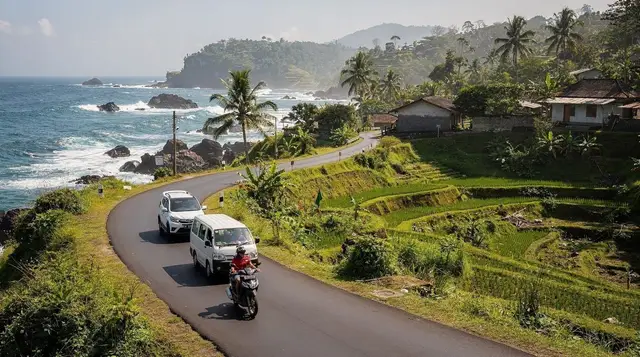
The Bukit Peninsula is the dry, hilly landmass hanging off Bali’s southern tip, connected to the rest of the island by a narrow isthmus near the airport. Geologically and visually it’s a different Bali from the rice terraces and jungle further north — limestone cliffs, scrubby dry-season vegetation, and a coastline where most of the beaches sit at the bottom of a steep drop rather than at road level. That geography is the defining fact of the whole peninsula: getting to the water here usually means a set of stairs or a steep path first.
Uluwatu, at the peninsula’s southwestern point, tends to absorb most of the attention and most of the crowds, largely because of its temple and Kecak dance. But the Bukit extends well beyond that single point, with a string of named beaches along its western edge — Padang Padang, Bingin, Balangan, Dreamland, and others — each with a distinct character and, in most cases, a much smaller crowd than Uluwatu itself sees at sunset.
This guide treats the Bukit as the wider area it actually is, rather than a synonym for Uluwatu, and focuses on the beaches, surf, and cliffside atmosphere that make the peninsula worth dedicating real time to rather than a single stop on a day trip. It’s an area that rewards slowing down rather than rushing between named coves for photographs, and travellers who give it two or three days tend to come away with a very different impression than those who treat it as a single afternoon tacked onto an Uluwatu sunset run.
The Bukit Peninsula at a glance
| Where | Bali’s southernmost landmass, connected to the mainland near the airport |
| Cost | Beach access is generally free or a small parking fee; surf lessons and rentals cost extra |
| Time needed | A couple of days to cover several beaches properly; a single day if focused on one or two |
| Access | Scooter, private driver, or Grab/Gojek; steep paths and stairs down to most beaches |
| Best time | Dry season for calmer paths, better swell, and reliably clear water |
Getting down to the beaches
The single most distinctive feature of Bukit beaches, beyond the surf, is the approach. Almost every beach along the peninsula’s western coast sits below a limestone cliff, reached via a set of stairs, a narrow path, or in a few cases a track steep enough that flip-flops are genuinely a poor choice of footwear. This isn’t a minor detail — it shapes which beaches suit which kind of traveller, and it’s worth checking the specific access point for wherever you’re headed before committing, particularly with kids, limited mobility, or a lot of beach gear in tow.
Balangan and the peninsula’s surf beaches
Balangan Beach sits toward the peninsula’s western side and has built a reputation as one of the more approachable surf spots on the Bukit, with a reef break that suits a range of experience levels better than some of the more advanced breaks nearby. A Balangan Beach beginner surf lesson with equipment is a reasonable entry point if you’re new to surfing generally and want somewhere on the Bukit that isn’t as demanding as the Uluwatu breaks further south.
For surfers with some experience already, the Balangan Beach intermediate surf lesson steps up the pace, while the Balangan Beach surf lesson with instructor and equipment is a flexible option that scales to whatever level you’re actually at rather than assuming one fixed skill bracket.
Padang Padang and Bingin, the postcard coves
Padang Padang is one of the most photographed beaches on the peninsula, a small cove reached through a narrow rock passage that opens onto a compact stretch of white sand, with surf breaking just offshore for those with the experience to handle it. Its size is exactly what makes it both appealing and, at peak times, crowded — it’s genuinely small, and a wave of arrivals in the late morning changes the character of the visit considerably compared with an early start.
Bingin, a short distance along the coast, has a more spread-out, laid-back feel, with a cluster of small warungs and guesthouses built into the cliffside overlooking the break below. It rewards a slower visit — settling in for a few hours rather than a quick look — and works well as a lunch stop between other beaches on the same stretch of coast.
Comparing three of the Bukit’s beaches
| Padang Padang | Bingin | Balangan | |
|---|---|---|---|
| Character | Small, iconic cove | Laid-back, cliffside warungs | Wider beach, approachable surf |
| Crowd level | Busy, especially midday | Moderate | Generally quieter |
| Best for | A quick, photogenic stop | A longer, relaxed afternoon | Surf lessons and beginners |
| Access | Rock passage, can feel tight | Steep stairs, well-established | Longer path, more open |
None of these three is objectively the best; they suit different kinds of days. Padang Padang for a short, striking visit, Bingin for settling in, and Balangan for surfing without the intensity of Uluwatu’s breaks further south.
Green Bowl and the quieter southern coves
Beyond the well-known run of Padang Padang, Bingin, and Balangan, a handful of smaller, less-visited coves sit further along the peninsula’s southern edge, Green Bowl among them. These tend to see a fraction of the visitors the headline beaches get, largely because the descents are longer or less obviously signposted, which filters out casual passers-by in favour of people who’ve specifically sought the spot out. The trade-off is real: less crowded, but also fewer facilities at the bottom, so a self-sufficient approach with your own water and shade matters more here than at the more developed coves.
Dreamland and the developed end of the peninsula
Dreamland Beach sits closer to New Kuta Golf and a more developed stretch of the peninsula, with easier road access than some of the more remote coves further south. It’s a reasonable choice if steep cliffside stairs aren’t appealing on a given day, trading a bit of the wilder character other Bukit beaches have for more straightforward access and amenities.
Sunset bars along the cliffs
A handful of cliffside bars and warungs along the peninsula have built reputations well beyond Bali specifically for sunset drinks with a view over the surf below, drawing a mixed crowd of surfers finishing a session and visitors who’ve come purely for the setting. They tend to get busy in the final hour before sunset, with limited seating relative to demand at the more established spots, so arriving with some daylight to spare rather than right at golden hour makes for a more relaxed evening.
Is the effort of reaching these beaches worth it?
What isn’t worth the detour
Skip trying to see every named beach on the peninsula in a single day — the drive times between them along winding, sometimes rough roads add up quickly, and rushing from cove to cove tends to produce a worse experience at each one than picking two or three and actually spending time there. It’s also not worth attempting some of the steeper cliff descents at high tide or in wet-season downpours; several paths become genuinely slippery, and the reward rarely justifies the risk on a bad-weather day.
What it costs
Most Bukit beaches are free to access, sometimes with a small parking fee at the top of the cliff path. Surf lessons and board rentals are the main cost variable, priced by session length and typically including basic equipment. Food and drink at the cliffside warungs above the beaches run modestly, generally cheaper than resort-area equivalents further north, though prices climb somewhat at the more established spots like Bingin’s cliffside row.
When to go
Dry season, roughly April to October, is the more reliable window for the whole peninsula — better swell for surfing, drier and less slippery cliff paths, and generally clearer water. The wet season from November to March still allows for beach visits on most days, since rain tends to arrive in short, heavy bursts, but the steep descents become genuinely more hazardous when wet, which is worth factoring in if mobility on uneven terrain is already a concern. Early mornings, regardless of season, consistently mean smaller crowds at the more popular coves like Padang Padang.
Getting there and getting around
The Bukit Peninsula is reachable by scooter, private driver, or Grab/Gojek from anywhere in south Bali, with the peninsula’s own internal roads varying quite a bit in quality — some stretches are well maintained, others narrower and rougher, particularly closer to the more remote beaches. A scooter gives the most flexibility for beach-hopping across a single day, provided you’re comfortable navigating unmarked turns and steep local roads, while a private driver removes that stress at the cost of some spontaneity in changing plans beach to beach.
There is no public transport option that makes sense for tourists on the peninsula. If you’re combining several beaches with Uluwatu itself in one day, plan the route rather than backtracking, since the peninsula’s roads don’t always connect as directly as a map might suggest.
How this fits into a longer trip
The Bukit Peninsula sits naturally alongside a visit to Uluwatu itself, since the temple and Kecak dance are one point on the same landmass, and many travellers combine a day of beach-hopping with an evening at the temple. It also connects easily to Jimbaran to the north for a seafood dinner after a day on the sand, and to Nusa Dua if you want to contrast the peninsula’s wild cliffside coves with a calmer, resort-style beach.
Read the Bukit Peninsula’s hidden beaches guide for a deeper breakdown of the smaller, lesser-known coves beyond the ones covered here, and the Uluwatu surf breaks guide if surfing across the whole peninsula, not just Balangan, is the priority. For a broader trip built around beaches, the best beaches in Bali guide puts the Bukit’s coves in context against the rest of the island, and the Bali surf trip, 10 days itinerary threads several of these breaks together with others further afield.
Frequently asked questions about Bukit Peninsula
Is the Bukit Peninsula the same thing as Uluwatu?
No. Uluwatu is one specific point on the peninsula, known for its temple and Kecak dance, while the Bukit is the wider landmass holding a whole string of other beaches — Padang Padang, Bingin, Balangan, and more — each with its own access point and character.
Which Bukit beach is best for someone who isn’t a strong swimmer?
Balangan tends to be the more approachable of the well-known options, with a gentler beginner-friendly stretch alongside its surf break, though conditions vary by day and tide, so check before assuming any Bukit beach is calm.
Do I need a scooter to see the Bukit properly?
Not strictly, but it gives the most flexibility for moving between beaches across a day. A private driver is a reasonable alternative if you’re not comfortable navigating the peninsula’s narrower, less signposted roads.
Is Padang Padang worth visiting if it’s going to be crowded?
Yes, particularly with an early start before the late-morning crowds arrive. Its size and setting are genuinely distinctive even if you have to share the cove with other visitors.
Are the cliff paths down to the beaches difficult?
Several are genuinely steep, with stairs or uneven terrain rather than a gentle slope. Proper footwear matters, and it’s worth checking a specific beach’s access before committing if mobility is a concern.
Is it safe to leave belongings on the beach while swimming?
As with most public beaches anywhere, it’s worth keeping valuables to a minimum or taking turns watching bags rather than leaving everything unattended, particularly at the busier coves where a steady flow of visitors makes it harder to notice anything amiss.
Can I combine several Bukit beaches with Uluwatu in one day?
It’s possible but tight — the drive times between beaches and the temple’s own sunset timing mean most visitors are better served picking two or three stops rather than attempting the whole peninsula in a single day.
Is there anywhere to stay directly on the Bukit Peninsula?
Yes, a growing number of guesthouses and villas sit along the cliffside near Bingin and Uluwatu specifically, which suits travellers who want to be close to the surf and cliffside atmosphere rather than commuting in from further north each day.
Is the Bukit Peninsula suitable for a first trip to Bali?
It works well as part of a first trip if beaches, surf, or cliffside scenery are a priority, though it’s worth pairing with time in Ubud or elsewhere for travellers who also want rice terraces and a more inland side of the island. On its own, the peninsula covers one specific kind of Bali experience rather than the full range.
Do the beaches on the Bukit have lifeguards?
Coverage varies significantly by beach and isn’t consistent across the peninsula the way it might be at a resort-managed beach elsewhere. It’s worth checking conditions and any posted flags at the specific cove you’re visiting rather than assuming supervision is in place.