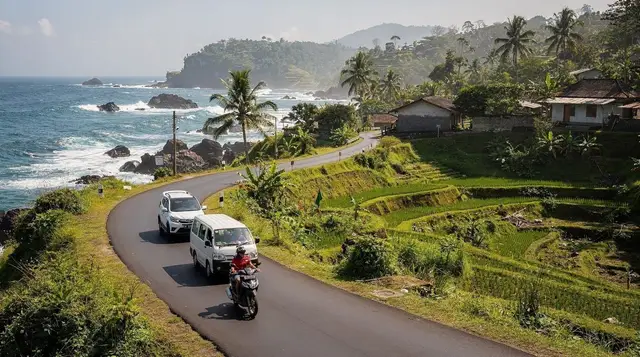
Nusa Dua was built deliberately, not grown organically the way most of Bali’s coastal towns were. In the 1970s, the Indonesian government designated the area as a planned resort enclave, and the result today is a wide stretch of coastline lined with large international hotel chains, manicured landscaping, and a beach partly protected from open-ocean swell by an offshore reef. That planning is the whole story of what Nusa Dua is and isn’t: calmer, tidier, and more predictable than almost anywhere else in south Bali, at the cost of the loose, local-feeling street life you get in Kuta or Ubud.
For families and honeymooners in particular, that trade-off tends to work in Nusa Dua’s favour. The reef offshore keeps the water noticeably calmer than the surf beaches further west, which matters directly for anyone travelling with young children or simply wanting to swim without fighting a current. The gated resort grounds also mean less of the persistent touting that can wear visitors down elsewhere on the island.
None of that makes Nusa Dua a complete picture of Bali on its own, and it’s worth being upfront about that rather than pretending otherwise. Most visitors either base here deliberately for the calm and convenience, accepting the trade-off, or use it for a single day of watersports and swimming as part of a trip based elsewhere.
Nusa Dua at a glance
| Where | Southeastern coast of the Bukit Peninsula, south Bali |
| Cost | Resort stays run at the higher end of Bali pricing; the public beach and boardwalk are free to walk |
| Time needed | A half day for the beach and watersports; several days if staying at a resort |
| Access | Private driver, Grab/Gojek, or airport transfer; a manageable distance from the airport |
| Best time | Dry season for the calmest water and clearest watersports conditions |
The beach and the reef
Nusa Dua’s beach is wide, white-sand, and calmer than almost anywhere else in south Bali, a direct result of the barrier reef sitting offshore that breaks up incoming swell before it reaches the shore. That calm water is the single biggest practical difference between Nusa Dua and the surf-focused beaches further along the coast, and it’s the reason the area attracts families and less confident swimmers specifically.
A public boardwalk runs along a long stretch of the coastline, open to anyone rather than restricted to resort guests, and it’s a genuinely pleasant walk away from traffic, lined with a mix of resort grounds and a scattering of independent cafes. It’s one of the easier ways to get a feel for the area without committing to a hotel stay there. The boardwalk also links Nusa Dua to the neighbouring Tanjung Benoa peninsula, so a longer walk or run covers both areas’ beachfronts in one go, useful if you want to compare the two without arranging separate transport.
Watersports, made easier by calm water
The same reef-protected water that makes Nusa Dua good for swimming also makes it a reliable base for beginner-friendly watersports, since conditions are more predictable than at exposed beaches. A jet ski ride at Nusa Dua beach is a straightforward way to get out on the water without the swell issues that affect other south Bali launch points, and a session of snorkelling at Nusa Dua beach makes use of the same calmer conditions to get a look at the reef itself rather than fighting current.
For something a bit more active but still forgiving for beginners, the Nusa Dua banana boat and Turtle Island tour pairs the calm-water fun with a stop that appeals to families with younger kids in particular. None of these activities require prior experience, which is part of the point of choosing Nusa Dua for a watersports day over a more exposed beach.
Surfing, on the other side of the point
It’s a common misconception that Nusa Dua has no surf at all because the main beach is so calm. In fact, a reef break exists further out past the barrier reef, reachable by boat, that offers a genuinely different experience from the shore-side calm water. It’s a niche activity relative to the beach’s main reputation, but a beginner to intermediate surf lesson in Nusa Dua is a reasonable way to try it without needing to already know the specific break or arrange a boat independently.
Golf and the Museum Pasifika
Nusa Dua’s flat, landscaped grounds have made it one of Bali’s established golf destinations, with a course built into the resort area itself. It’s a niche interest relative to the beach, but for travellers who play, it’s one of the more convenient courses on the island to combine with a resort stay rather than a dedicated day trip elsewhere.
For a change of pace that isn’t beach or sport, the Museum Pasifika guided art tour in Nusa Dua is a genuinely under-visited option given how few visitors think to look for a museum in a resort enclave. It houses a collection of art from across the Asia-Pacific region and Bali specifically, and works well as a rainy-afternoon alternative to the beach.
Nusa Dua versus Sanur for calm-water travel
| Nusa Dua | Sanur | |
|---|---|---|
| Atmosphere | Resort enclave, gated grounds | Low-key town, more local feel |
| Water | Reef-protected, calm | Reef-protected, calm |
| Accommodation | Large international resorts | Smaller hotels and guesthouses |
| Nightlife | Resort bars, limited outside options | A modest but genuine local scene |
Both Nusa Dua and Sanur share the calm-water advantage, since both sit behind protective reefs, but the atmosphere is genuinely different — Nusa Dua leans into the resort enclave model fully, while Sanur keeps more of an ordinary town feel around the calm beach. Travellers who want the calm water without the gated-resort atmosphere often prefer Sanur; those who want the full resort experience with more facilities on-site tend to prefer Nusa Dua.
Shopping without leaving the enclave
An open-air shopping and dining complex sits within Nusa Dua itself, giving resort guests somewhere to walk to for dinner or a change of scenery without arranging transport off-site. It’s a genuinely useful option on an evening when you don’t want to deal with traffic to reach Kuta or Seminyak, though it doesn’t replace either for range or atmosphere — think of it as a convenient extension of the resort experience rather than a destination in its own right.
Getting a table for a relaxed massage or spa day
Nusa Dua’s resorts almost universally offer spa facilities, and the calm, low-hassle atmosphere of the area makes it a natural fit for travellers prioritising a slower pace over sightseeing. A booked spa treatment is one of the more straightforward ways to spend an afternoon here without needing to plan transport anywhere else, and quality tends to be consistent across the larger resort spas given the concentration of international hotel standards in the area.
Is Nusa Dua worth choosing over a livelier base?
What isn’t worth the detour
Skip trying to use Nusa Dua as a base for exploring the rest of Bali on a tight schedule — its whole appeal is the self-contained resort environment, and that same self-containment makes day trips out to Ubud, the volcanoes, or east Bali feel like a bigger commitment than they would from a more centrally located base. It’s also not the place to go looking for budget accommodation or an authentic street-food scene; both exist in abundance elsewhere in Bali, just not within Nusa Dua’s gated core.
What it costs
Nusa Dua sits at the higher end of Bali’s accommodation pricing, reflecting the concentration of large international resort brands rather than independent guesthouses. Watersports and activities booked through resort desks tend to cost more than the equivalent booked independently or through an online operator, so it’s worth comparing before assuming the concierge price is the only option. The public beach and boardwalk cost nothing to use, which makes a day visit from elsewhere in south Bali a low-cost way to sample the calm water without paying resort rates.
When to go
Dry season, roughly April to October, brings the calmest and clearest conditions for swimming and watersports, along with fewer rain interruptions to golf or resort pool days. The wet season from November to March still allows for most resort activities, since rain tends to fall as short, heavy bursts rather than washing out entire days, but the calmer water Nusa Dua is known for can still turn choppier during storm swells passing through. High season, July, August, and the Christmas and New Year period, pushes resort rates up noticeably, so booking ahead matters more here than at budget accommodation elsewhere.
Getting there and getting around
Nusa Dua sits a manageable distance from the airport, making it a reasonable choice for travellers who want resort comfort without an extremely long transfer. From Kuta, Seminyak, or Canggu, the drive takes a while longer, and from Ubud it’s a genuinely long trip across the island. There’s no train or metro anywhere in Bali, so getting around means private driver, Grab, Gojek, or resort shuttle, and many resorts run their own shuttle services within the enclave itself, reducing the need for external transport if you’re staying put for the day.
How this fits into a longer trip
Nusa Dua works well paired with a day at Jimbaran for a contrasting seafood-dinner evening, or with Uluwatu if you want to add the clifftop temple and Kecak dance to an otherwise beach-and-resort-focused stay. Read the watersports at Tanjung Benoa guide for the fuller range of activities available just along the coast from Nusa Dua’s main beach, and the family-friendly beaches in Bali guide if you’re comparing Nusa Dua against other calm-water options for a trip with young children.
For honeymooners or travellers prioritising comfort over budget, the Bali honeymoon guide and the Bali luxury, 7 days itinerary both build naturally around a Nusa Dua stay. If Nusa Dua is one stop within a wider trip rather than the whole base, the Bali airport guide and Grab and Gojek in Bali guide are worth reading for the logistics of moving between it and other areas.
Frequently asked questions about Nusa Dua
Is Nusa Dua good for families with young children?
Yes, generally more so than most of south Bali’s other beach areas, thanks to the reef-protected calm water and the gated, low-traffic resort environment. It’s one of the more consistently recommended areas for families with younger kids specifically.
Can I visit Nusa Dua’s beach without staying at a resort there?
Yes. The main beach and boardwalk are public, and plenty of day visitors come for swimming, snorkelling, or watersports without booking a hotel in the area.
Is Nusa Dua too quiet or resort-focused for younger travellers?
It can feel that way if you’re looking for nightlife or a local street scene, both of which are limited within the enclave itself. Travellers wanting that alongside calm-water days sometimes base in Sanur or Kuta instead and visit Nusa Dua for activities.
Does Nusa Dua have real surf, or is the water always calm?
The main beach is calm thanks to the barrier reef, but a genuine reef break exists further out, reachable by boat, for those specifically looking to surf rather than swim.
Is Nusa Dua expensive compared to the rest of Bali?
Generally yes, particularly for accommodation, given the concentration of large international resort brands. Activities and food away from the resort strip tend to be more reasonably priced.
Is the Museum Pasifika worth visiting?
It’s a solid option if you want a break from the beach, particularly on a rainy day, and it’s genuinely under-visited relative to its quality given how few travellers expect to find a museum in a resort area.
How far is Nusa Dua from the airport?
Close enough to make it a reasonable choice if you want resort comfort without a very long transfer, though not as close as Jimbaran, which sits directly adjacent to the airport itself.
Is it worth renting a car or scooter while staying in Nusa Dua?
Most visitors staying within the enclave get by fine without one, relying on resort shuttles, Grab, or Gojek for the occasional trip out. A rental makes more sense if you’re planning frequent day trips further afield and want flexibility over on-demand ride availability, though a private driver for specific day trips is often less hassle than self-driving unfamiliar Bali roads.
What’s the difference between Nusa Dua and Tanjung Benoa next door?
They sit right next to each other and share the same calm, reef-protected water, but Tanjung Benoa has developed more specifically around watersports operators lining its beach, while Nusa Dua’s coastline is dominated by the resort grounds themselves. Many visitors treat them as one continuous area rather than two separate destinations.