Ayung River Rafting: What to Expect on Bali's Most Popular Rapids
Is Ayung River rafting worth doing if I've never rafted before?
Yes — it's specifically the reason the Ayung has become Bali's default rafting river. The rapids sit at a beginner-to-intermediate grade, the scenery through the gorge is genuinely dramatic, and every commercial trip runs with a guide steering and calling instructions, so prior experience isn't required. It's a lower-intensity trip than some travellers expect from the marketing photos.
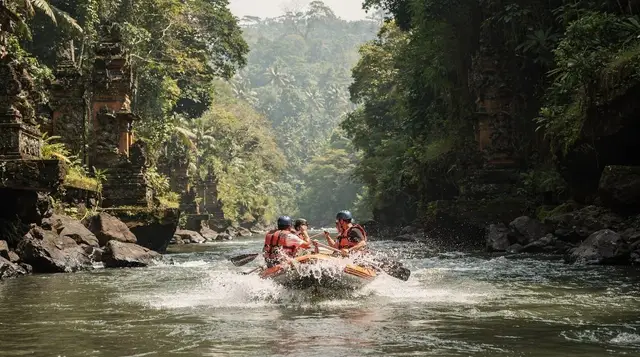
The Ayung River cuts through a steep, jungle-walled gorge just west of Ubud, and it has become Bali’s default white-water rafting run for a straightforward reason: the rapids are lively enough to feel like a genuine adventure without requiring any prior rafting experience, and the surrounding scenery — waterfalls dropping into the gorge, dense jungle walls, the occasional glimpse of a temple or rice terrace above the river line — makes the whole trip photogenic even in the calmer stretches between rapids.
It’s worth being upfront about what this is and isn’t. The Ayung is not a serious white-water expedition for people chasing an adrenaline-heavy grade-four-plus experience; it’s a beginner-to-intermediate run, commercially operated with guides steering and calling every raft, designed to be accessible to nearly anyone reasonably fit. That’s exactly the point for most visitors, and it’s why the river handles such a high volume of first-time rafters every single day without incident, but it’s worth knowing before you book if you’re specifically hunting for something more extreme.
This guide covers what the actual rafting experience involves, how the combined ATV-and-rafting packages work if you want to pack more into a single day, and what to expect logistically from pickup to the post-raft shower.
Ayung River rafting at a glance
| Where | Ayung River gorge, west of Ubud, central Bali |
| Difficulty | Beginner-to-intermediate rapids; suitable for most fitness levels and non-swimmers with a life vest |
| Time needed | Roughly two hours on the water, plus pickup, briefing and a change/shower afterwards |
| Age | Most operators set a minimum age (commonly around seven or eight); confirm with the specific operator if travelling with young children |
| Best time | Year-round; water levels and rapid intensity shift somewhat with the season |
What the rafting itself is actually like
Trips launch from a put-in point along the gorge and run for around two hours downstream, alternating between genuine rapids and calmer stretches where the guide will often point out waterfalls, carved rock faces, or wildlife along the banks. A standard trip like the Ayung River white water rafting trip with a jungle swing add-on covers the core experience and, in this case, pairs it with a swing stop, which has become a popular combination given how close several of Ubud’s well-known swing platforms sit to the river valley.
Every raft carries a trained guide who does the steering calls, so passengers are following instructions on when to paddle rather than navigating independently — this is standard practice and part of why the trip is accessible to complete beginners.
The gorge itself is the real headline. Steep jungle walls rise on both sides for much of the route, with several genuine waterfalls visible from the raft, and the contrast between the calm, green scenery and the sudden churn of a rapid is a large part of what makes the trip memorable beyond the physical activity itself.
The ATV-plus-rafting combination: is it worth the long day
A large share of Ayung rafting bookings come bundled with an ATV or quad bike route earlier in the day, and it’s worth understanding why this pairing is so common before deciding whether it suits you. Both activities are based in the same general area west of Ubud, both involve getting genuinely dirty or wet, and both run for a similar couple of hours, which makes combining them into one day logistically efficient.
A package like Ubud’s quad bike, Ayung River rafting and massage tour goes a step further, adding a spa element to help recover from what is, in total, a physically demanding day. Similarly, the Ubud 350cc ATV adventure combined with Ayung River rafting pairs a more powerful ATV experience with the standard rafting run.
The honest trade-off is fatigue. Doing both an ATV route and a full rafting trip in the same day is a genuinely full, tiring schedule — expect to be ready for an early night afterwards, and don’t plan much else for that day beyond the two activities and transport between them. If you’d rather not commit to that much physical activity in one go, booking rafting as a standalone half-day, and saving ATV riding for a separate day, is a perfectly reasonable choice and lets you enjoy each activity without the accumulated exhaustion.
What happens if you fall out
It’s a fair question and one worth answering directly rather than glossing over. Falling out of the raft on a rapid does happen occasionally, even at the Ayung’s beginner-to-intermediate grade, and it’s part of what the safety briefing at the put-in point covers. The standard instruction is to keep your feet up and pointed downstream, let the life vest do its job, and either swim towards the raft or wait for the guide’s kayak-assisted crew (most operators run a support kayak alongside the group) to help you back in.
It sounds more alarming described in the abstract than it tends to feel in practice, in part because the guides handle it calmly and routinely, having seen it many times before. Genuinely serious incidents are rare given the river’s grade and the volume of daily commercial traffic, but it’s honest to say the risk isn’t zero, which is exactly why the briefing and the life vest aren’t optional formalities.
Comparing operators: what actually varies
With so many operators running trips on the same stretch of river, the differences between them come down to a few practical factors rather than the rafting experience itself, which is fairly standardised by the river’s fixed course. Group size varies — some operators run larger convoys of rafts down the river together, which can mean more queuing at rapids and a busier, more crowd-like feel, while smaller operators space groups out more.
What’s included in the package (lunch, a shower facility, a change of clothes, hotel transport time) varies more than the on-water experience does, and it’s worth checking these details rather than assuming they’re all identical. Reviews across most established operators tend to be similarly positive, which reflects the fact that the river itself, not operator skill, is the main driver of how good the trip feels.
What isn’t worth the detour
Skip any operator advertising the Ayung as an extreme, serious white-water experience — it isn’t, and setting that expectation before you arrive tends to lead to disappointment on the water when the reality turns out to be a fun, moderate-intensity trip rather than a heart-stopping one. It’s also not worth paying a significant premium for a “private raft” option unless privacy specifically matters to you; the standard shared-group format doesn’t meaningfully diminish the experience for most people, since you’re still following the same guide’s instructions regardless of who else is in the raft.
What it costs
Standalone Ayung rafting trips sit at a moderate price point among Bali’s adventure activities, with combined packages (rafting plus ATV, or rafting plus a spa add-on) costing more but generally working out cheaper than booking each element separately through different operators. Most trips include hotel pickup and drop-off, a change of clothes or a place to shower afterwards, and sometimes a simple lunch, so check what’s bundled into the quoted price before comparing across listings — a slightly higher price that includes lunch and a shower can work out better value than a cheaper one that doesn’t.
When to go
The Ayung runs year-round regardless of season, since it’s a permanent river rather than a seasonal waterfall, but water levels and the corresponding intensity of the rapids do shift somewhat between the wetter months (November to March) and the drier ones (April to October). Wetter-season trips can mean slightly higher, more energetic water; dry-season trips are generally calmer, which some first-timers prefer. Morning departures tend to be cooler and less crowded than midday slots, and given how many operators run trips daily, weekday bookings are generally quieter on the water than weekends.
Getting there and around
Rafting operators are based directly at the put-in and take-out points along the gorge, and essentially every trip includes hotel pickup and drop-off as a standard part of the package, given how far the river sits from South Bali’s main accommodation areas and the impracticality of arriving independently by scooter with wet gear afterwards. Confirm your pickup time and location when booking, and expect the full day, including transport, briefing, the two-hour raft, and a shower or change afterwards, to run to roughly half a day even though the rafting itself is shorter.
How this fits into a longer trip
Ayung rafting pairs naturally with Ubud’s other adventure activities, and the Bali ATV and quad guide covers the combined-day option in more depth if you’re weighing up whether to stack both activities together. For a calmer alternative on the same general stretch of river valley, the Bali cycling tours guide covers Ubud’s popular downhill cycling routes, which cover similar scenery at a much gentler pace. The Ubud destination page has the fuller picture of what else the area offers beyond adventure sports.
If you’re planning a broader Bali itinerary that includes an adventure-focused day, the Bali 7 days itinerary and the Bali 10 days itinerary both allocate enough time in the Ubud area to fit a half or full day of rafting without crowding out its temples and rice terraces, and the Bali canyoning guide is worth reading if you want a different kind of water-based adventure activity for a separate day.
Frequently asked questions about Ayung River Rafting
Do I need to know how to swim to go rafting on the Ayung?
Not strictly, since a properly fitted life vest is mandatory on every commercial trip and the guide is steering, but being comfortable in water is a genuine advantage if the raft does tip, which happens occasionally even on beginner rapids.
How intense are the rapids, really?
Beginner-to-intermediate grade, meaning genuine rapids with real bumps and splashes, but nothing close to expedition-level white water. Most first-time rafters find it exciting rather than frightening.
Is Ayung River rafting suitable for children?
Generally yes, subject to a minimum age set by the specific operator, commonly around seven or eight years old. Confirm the age and any weight requirements directly with your chosen operator if travelling with kids.
How wet do you actually get?
Thoroughly. This isn’t a trip where you stay mostly dry with occasional splashes — expect to be properly soaked for most of the two hours, which is part of why quick-dry clothing and securing your phone matters.
Can I combine rafting with an ATV tour on the same day?
Yes, and it’s a common combination given both activities’ proximity west of Ubud, but be realistic about the physical toll of doing both in one day — it’s a genuinely full, tiring schedule rather than a relaxed one.
What should I bring?
Quick-dry clothing, secured closed-toe water shoes or sandals with a back strap, a waterproof phone case if you want photos, and a change of clothes for after the trip. Sunscreen is also worth applying before you start, since you’ll be exposed to sun during the calmer stretches.
Is Ayung rafting worth it if I’ve already rafted elsewhere in the world?
If you’ve done more serious white water before, the Ayung will likely feel gentle by comparison, but the gorge scenery — waterfalls, jungle walls, the occasional temple glimpse — is distinctive enough to make the trip worthwhile as a scenic experience even for rafters used to bigger rapids.
How many rapids are there on the Ayung run?
The exact count varies slightly by exactly where the trip starts and ends, but expect a series of distinct rapids interspersed with longer calm stretches over the roughly two-hour run, rather than continuous white water the entire way.
Does the rafting trip include a shower or place to change afterwards?
Most established operators provide a shower and changing facility at the take-out point, along with a towel in many cases, but this varies by operator and package, so it’s worth confirming before you book, especially if you have onward plans the same day.
Is Ayung rafting affected by drought or dry spells?
Water levels can drop somewhat during an unusually dry stretch, which may soften the intensity of the rapids slightly, but the river is fed by a large catchment area and doesn’t typically run too low for rafting even in the driest months of the dry season.
Should I book directly with a rafting operator or through a wider tour package?
Either works, and the practical difference is mainly about what else is bundled in. Booking through a combined package saves coordinating separate transport and timing if you also want an ATV route or another activity the same day; booking rafting alone gives more flexibility on timing and generally focuses the whole day on one thing.
Adventure sports on GetYourGuide
Verified deep-linked GetYourGuide tours. Book through these links and we earn a small commission at no cost to you.
These are our own photographs of Bali, not the operator's pictures of this tour — open the tour page to see those.